A practical, ingredient-first guide to choosing skincare during pregnancy.
Pregnancy has a funny way of turning products you’ve used for years into a source of low-level anxiety.
A cream that never bothered you in your twenties suddenly gets read label to label. One of the most common questions that comes up during that process is simple: are Nivea, Burt’s Bees, or Mustela actually safe to keep using now that you’re pregnant?
The Short Answer
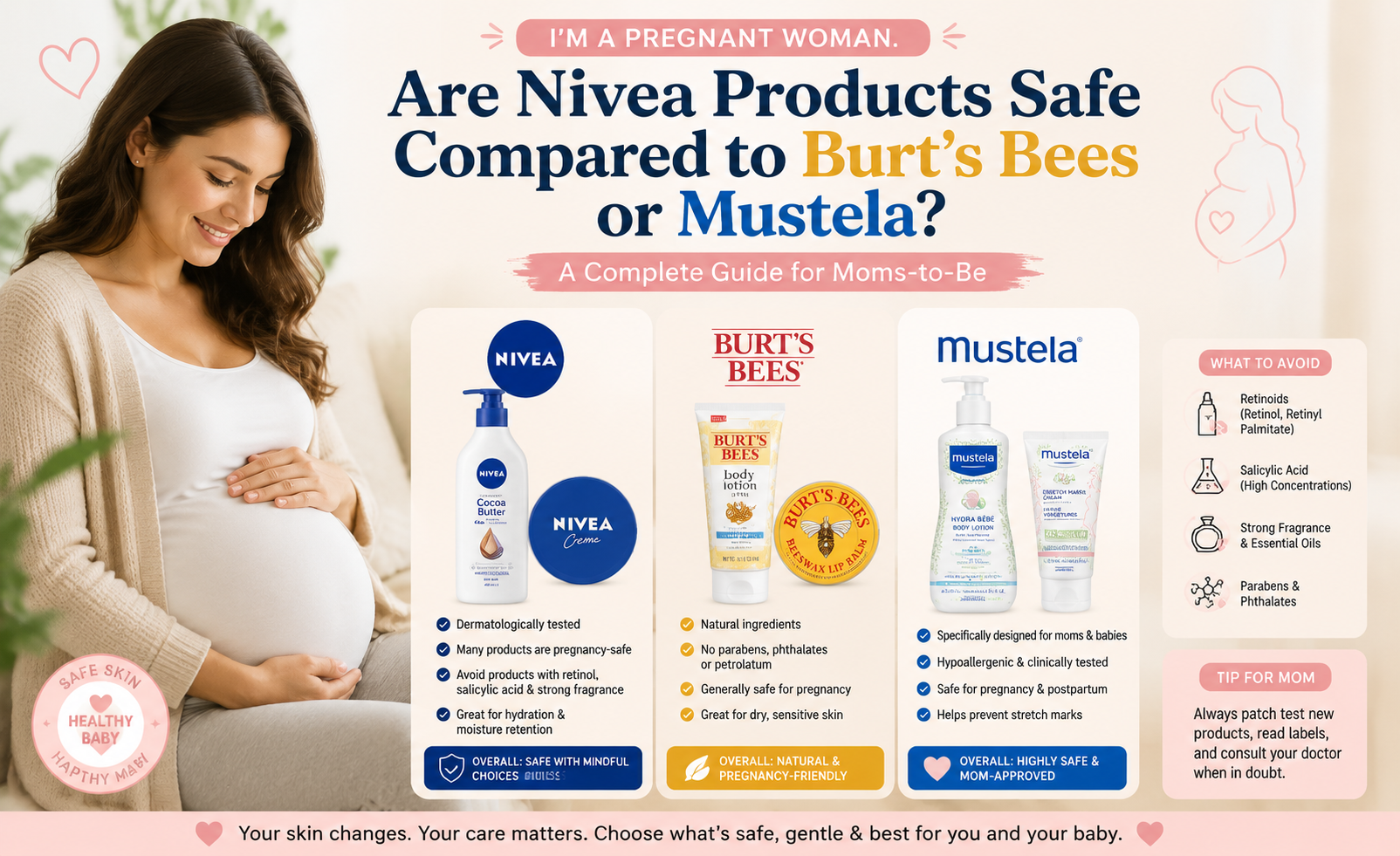
No single brand here is automatically “the safe one.” Safety comes down to the ingredients in a specific product, not the name on the bottle. The two ingredients dermatologists most consistently flag during pregnancy are retinoids, including retinol, and hydroquinone, both typically found in treatment or anti-aging products rather than basic moisturizers. Most everyday lotions and creams, regardless of brand, have low skin absorption and are generally considered low-risk when used as directed.
It also helps to know that pregnancy itself changes how your skin behaves, not just what’s in the products you’re using. Hormonal shifts can increase oil production, dryness, pigmentation, and general reactivity, which is why a lotion that felt totally fine last year might suddenly feel too heavy, too fragrant, or slightly irritating this time around.
What Makes Nivea a Practical Choice
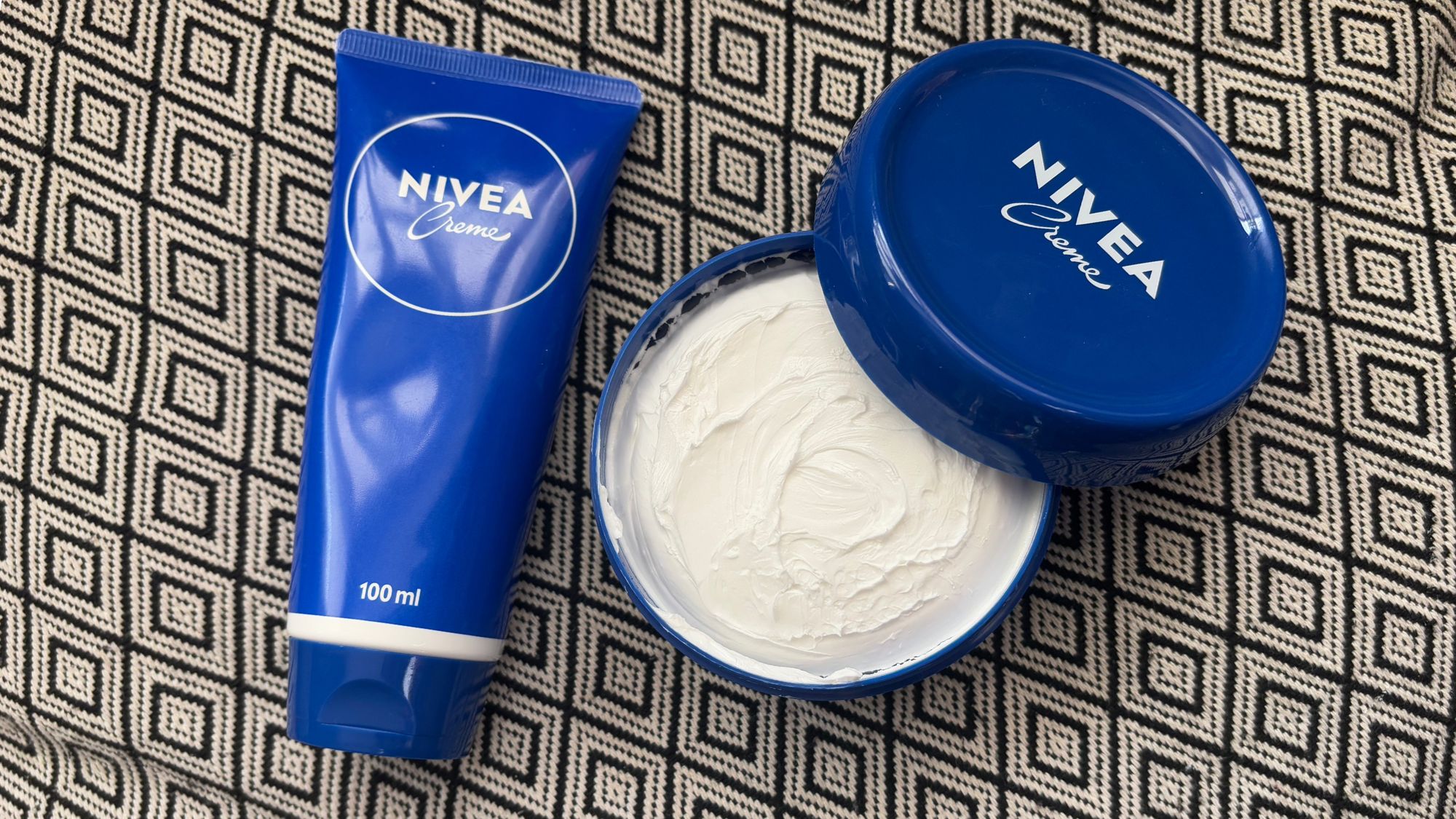
Nivea’s core lineup relies on straightforward ingredients like glycerin, panthenol, and shea butter, built simply to hydrate rather than treat anything specific. That makes most of the classic Nivea Creme and body lotion range low-concern during pregnancy, and the price point makes it easy to use generously over a changing, stretching body without worrying about the cost.
The one thing worth checking is fragrance. Pregnancy tends to heighten sensitivity to scent, and several popular Nivea products are lightly fragranced, which can bother skin that never used to react to anything at all.
Where Burt’s Bees Fits In
Burt’s Bees built its identity around plant-based, naturally derived ingredients, and its maternity-specific line, including Mama Bee Belly Butter, leans on cocoa butter, shea butter, and sweet almond oil to handle the dry, stretching skin that comes with a growing belly.
Natural doesn’t automatically mean risk-free, though. Essential oils and botanical extracts, while gentler for many people, can still irritate sensitive pregnancy skin just as easily as a synthetic ingredient can. It’s worth patch-testing anything new rather than assuming “plant-based” automatically means safe for everyone.
Why Mustela Stands Out for Pregnancy Specifically
Mustela is different from the other two in one key way: pregnancy and infant skincare are its actual focus, not a side category. Its maternity products are developed specifically around concerns like stretch marks, dryness, and heightened sensitivity, and the brand leans heavily on dermatological testing to back that up.
That focus comes at a cost, literally. Mustela typically runs more expensive than Nivea or Burt’s Bees, which tracks given how narrowly its products are formulated for this exact life stage rather than general everyday use.
The Ingredients That Actually Matter, Regardless of Brand
The most useful approach isn’t picking a favorite brand, it’s checking labels for a short list of ingredients. Avoid retinoids and retinol, typically found in anti-aging serums and treatments. Avoid hydroquinone, sometimes used in skin-brightening products. Use caution with high concentrations of salicylic acid, common in acne treatments. Nearly everything else across all three of these brands falls into the low-concern category for a typical, uncomplicated pregnancy.
It’s also worth remembering that online forums can turn reasonable caution into unnecessary panic, labeling perfectly ordinary moisturizers as dangerous without much evidence behind it. A quick label check for the ingredients above will usually tell you more than a worried comment thread will.
QUICK COMPARISON: NIVEA VS BURT’S BEES VS MUSTELA
| ATTRIBUTE | NIVEA | BURT’S BEES | MUSTELA |
| Key Ingredients | Glycerin, panthenol, shea butter | Cocoa butter, shea butter, plant oils | Tested, pregnancy-specific actives |
| Best For | Everyday hydration | Natural-ingredient preference | Pregnancy-specific concerns |
| Fragrance-Free Options | Some — check labels | Some — check labels | Mostly fragrance-free |
| Stretch Mark Focus | Not a specialty | Belly Butter line | Strongest dedicated line |
| Typical Price | Most affordable | Mid-range | Highest |
| Pregnancy-Specific Line | No | Limited (Mama Bee) | Yes, extensive |
| Double-Check For | Fragrance in some lotions | Essential oils, extracts | Fewer concerns overall |
The Bottom Line
If you want simple, affordable hydration, Nivea covers the basics well. If plant-based ingredients matter most to you, Burt’s Bees fits that priority, as long as you’re still checking for essential oils that might irritate. If you want products built specifically around pregnancy, Mustela is hard to beat, even at a higher price point. Whichever direction you go, the label matters more than the logo, and it’s always worth running specific concerns by your doctor or a dermatologist rather than a search engine.
This article is for general information only and isn’t medical advice. Please check with your OB-GYN or dermatologist before adding or changing skincare products during pregnancy, especially if you have a specific health condition or concern.